
Prof. Bartosz Grzybowski
Ulsan National Institute of Science & Technology, South Korea

Prof. Matthew S. Sigman
University of Utah, USA

Prof. Fernanda Duarte
University of Oxford, UK

Dr. Samuel Genheden
AstraZeneca, Gothenburg, Sweden

Assist. Prof. Kjell Jorner
ETH Zurich, Switzerland

Dr. Anna Tomberg
AstraZeneca, Gothenburg, Sweden
Speaker biographical details
Prof. Bartosz Grzybowski
Ulsan National Institute of Science & Technology, South Korea
Bartosz A. Grzybowski (Yale’95, Ph.D. Harvard’00 with G.M. Whitesides) is a Distinguished Professor of Chemistry at the Ulsan National Institute of Science and Technology (UNIST, South Korea) and a Director of the IBS Center for Algorithmic and Robotized Synthesis (CARS) located therein. He is also affiliated with the Institute of Organic Chemistry, Polish Academy of Sciences. Although he has spent a large fraction of his research career on esoteric problems of self-assembly and non-equilibrium systems, he considers his most impactful discoveries to be in the area of computer-and robot-driven synthesis (e.g., the Chematica/Synthia and Allchemy programs). The chemical algorithms and robotics systems Grzybowski develops find applications in both academic and industrial settings, and have ramifications for the issues of global chemical production, circular economy, and national security. Grzybowski is an author of 300+ articles (H = 96; 19 in Nature and Science), and over the years received numerous accolades of which the 2016 Feynman Prize, Solvay Congress Lecture 2019, IUPAC Plenary Lecture 2023, and the 2022 Foundation for Polish Science Prize are closest to his heart. Grzybowski has founded several chemistry and biotech startups, and sits on the advisory boards of several companies and international organizations (e.g., OPCW in The Hague).
Prof. Matthew S. Sigman
University of Utah, USA
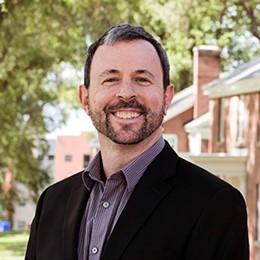
Matt Sigman was born in Los Angeles, California in 1970. He received a B.S. in chemistry from Sonoma State University in 1992 before obtaining his Ph.D. at Washington State University with Professor Bruce Eaton in 1996 in organometallic chemistry. He then moved to Harvard University to complete an NIH funded postdoctoral stint with Professor Eric Jacobsen. In 1999, he joined the faculty of the University of Utah where his research group has focused on the development of new synthetic methodology with an underlying interest in reaction mechanism. His research integrates the study/development of new chemical reactions with the invention of new data science approaches for reaction interrogation and optimization. He currently holds the rank of Distinguished Professor.
Sigman’s research efforts have been recognized by several awards including the Pfizer Award for Creativity in Organic Chemistry (2004), the Camille and Henry Dreyfus Teacher Scholar Award (2004), the Arthur C. Cope Scholar Award (2010), the University of Utah Distinguished Research Award (2011) and ACS Award for Creative Work in Synthetic Organic Chemistry (2017). Additionally, he has been recognized for outstanding teaching and mentoring at the University of Utah as highlighted by being named the University of Utah Distinguished Honors Professor (2008), Distinguished Teaching Award (2022) and Distinguished Mentoring Award (2025).
Dr. Anna Tomberg
AstraZeneca, Gothenburg, Sweden
Anna Tomberg is Associate Principal Scientist at AstraZeneca R&D in Gothenburg, where she researches drug design using machine learning and computational chemistry. She joined AstraZeneca in 2017 as a postdoctoral fellow and advanced to Senior Scientist before taking her current role in 2023. She earned her PhD in chemistry from McGill University in 2017, where she worked on computational studies of drug metabolism by CYP enzymes, following earlier research in peptide synthesis, azobenzene photochemistry, and catalysis. Her research focuses on the application of AI and computational methods to chemical reactivity, synthesis planning, and molecular design. She has co-authored work in Nature Reviews Chemistry and Nature Machine Intelligence on the integration of mechanism, data, and machine learning in chemistry. In addition to her research, she has contributed educational resources to the computational chemistry community, including tutorials on Gaussian and Orca software.
Assoc. Prof. Fernanda Duarte
University of Oxford, UK
Fernanda, born in Santiago, Chile, earned her PhD in 2012 from the Pontificia Universidad Católica de Chile. She was a postdoctoral researcher at Uppsala and a Newton Fellow at Oxford. After a brief period as a lecturer at the University of Edinburgh, she returned to Oxford in 2018 as an associate professor, where she leads a team developing computational tools to explore (bio)chemical reactivity and guide molecular design, connecting computational developments with practical applications. Fernanda has received several awards, including the MGMS Frank Blaney Award (2020), OpenEye Outstanding Junior Faculty Award (2021), Harrison-Meldola Memorial Prize (2021), and Novartis Early Career Award in Chemistry (2022). She was also selected as a finalist for the 2024 Blavatnik Award UK.
Assist. Prof. Kjell Jorner
ETH Zurich, Switzerland

Kjell Jorner is an Assistant Professor of Digital Chemistry at ETH Zurich since 2023. His work focuses on accelerating chemical discovery with digital tools, with a special emphasis on reactivity and catalysis. His group does interdisciplinary research, drawing from the fields of computational chemistry, cheminformatics and machine learning. Before joining ETH Zurich, he was a postdoctoral researcher with Alán Aspuru-Guzik (2021-2022) and at AstraZenecaUK (2018-2020). Kjell has a PhD from Uppsala University (2018) on computational physical organic chemistry for the photochemistry of aromatic compounds.
Dr. Samuel Genheden
Associate Director, AstraZeneca
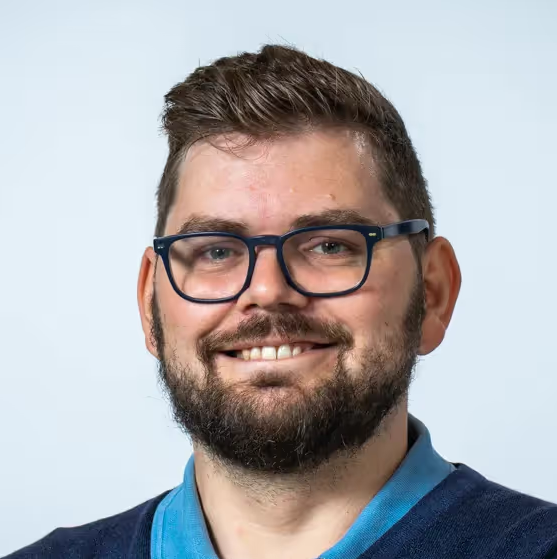
Samuel Genheden leads the Deep Chemistry team in Discovery Sciences, AstraZeneca R&D. He received his PhD in theoretical chemistry from Lund University in 2012, having studied computational methods to estimate ligand-binding affinities. He continued with postdocs at the Universities of Southampton and Gothenburg, where he simulated membrane phenomena using multiscale approaches. He joined the Molecular AI department at AstraZeneca in 2020 and became team leader in 2022. He leads research on the AiZynth platform for AI-assisted synthesis planning, and on agentic systems based on large language models. Samuel’s interests lie in studying chemical and biological systems with computers and using these approaches to impact drug development. He is a keen advocate for open-source software.